

Can Suppliers Customize Hotel Room Furniture to Your Brand?
A deep-dive B2B guide exploring how hotel furniture suppliers handle brand-specific customization, covering OEM/ODM capabilities, material selection, lead times, MOQ considerations, and what procurement teams must confirm before placing a custom order.
- Quick Answer
- How STARJOY Supports Custom Hotel Room Furniture Projects
- Discuss Your Custom Hotel Furniture Project Requirements
- What Exactly Can a Supplier Change When Customizing Hotel Room Furniture?
- How Do OEM and ODM Models Differ for Hotel Furniture Procurement?
- What Minimum Order Quantities Actually Apply to Custom Hotel Furniture?
- How Long Does It Actually Take to Produce Custom Hotel Room Furniture?
- Which Material and Finish Specifications Most Directly Affect Brand Consistency?
- What Quality Control Steps Should Buyers Require Before Shipment?
- FAQ
Quick Answer
Yes, specialized suppliers can customize hotel room furniture to align with STARJOY identity, covering dimensions, materials, finishes, colors, and embedded brand elements such as logos or signature hardware. STARJOY, a Guangzhou-based manufacturer with nearly 20 years of project experience, offers full OEM and ODM services for commercial hotel furniture projects. Key factors that shape any customization scope include project scale, material specifications, finish complexity, lead time requirements, and whether the design originates from the client or the supplier. Final solutions depend entirely on your specific project conditions.
How STARJOY Supports Custom Hotel Room Furniture Projects
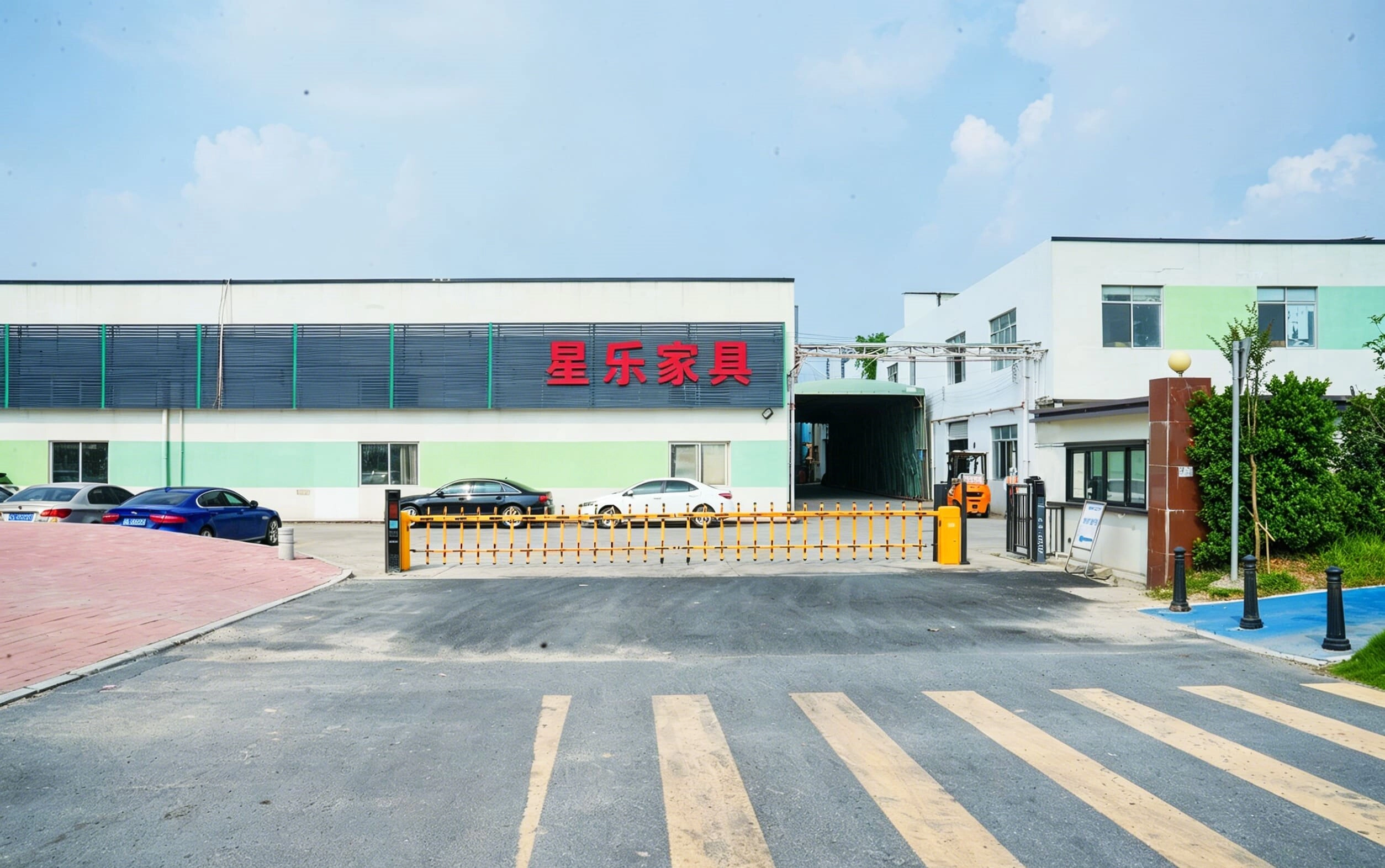
STARJOY operates six dedicated manufacturing plants across 56,000 square meters in Guangdong, covering partitions, screens, panels, wardrobes, chairs and sofas, and profiles. This integrated production structure allows the company to handle complete guestroom packages under one roof, from casegoods to upholstered seating, reducing coordination risk for procurement teams managing large-scale hotel fit-outs. The facility runs advanced machinery sourced from German and Italian manufacturers, supporting precision cutting, edge banding, and surface finishing at commercial volume.
For brand-specific customization, STARJOY supports client-supplied drawings, material boards, and finish samples, as well as supplier-led design development under an ODM model. Core parameters buyers need to confirm before a project brief is finalized include: room count and furniture quantity per room type, target material grade and finish references, brand color codes or physical samples, required certifications for the destination market, and any embedded brand elements such as custom hardware or logo detailing. MOQ thresholds, production lead times, and project quotations are confirmed on a per-project basis and vary with specification complexity.
Discuss Your Custom Hotel Furniture Project Requirements
To receive a project-specific assessment, prepare the following information before reaching out: hotel category and star rating, total room count and furniture scope per room type, preferred materials and finish references, brand color standards or physical samples, target delivery market and any applicable compliance requirements, and whether you are supplying design drawings or require design development support. STARJOY can discuss feasibility, lead time ranges, and preliminary cost structures based on your brief. Submit your project details at www.starjoyglobal.com or contact the project team directly at monica@starjoyglobal.com.
What Exactly Can a Supplier Change When Customizing Hotel Room Furniture?
The customization scope a qualified supplier can address is considerably broader than most procurement teams initially assume. At the structural level, suppliers can modify overall dimensions, internal configurations, joinery methods, and load-bearing specifications to suit non-standard room footprints or local building codes. At the surface level, customization covers veneer species and cut direction, lacquer color matched to a brand's Pantone or RAL reference, high-pressure laminate (HPL) patterns, and decorative edge profiles. Hardware selection, including pulls, hinges, and locking mechanisms, can be specified by brand or replaced with custom-cast components carrying a logo or proprietary profile.
Beyond individual pieces, suppliers experienced in full hotel fit-outs can also coordinate finish consistency across dissimilar substrates, ensuring that a headboard panel, a wardrobe carcass, and a desk surface read as a unified material palette even when produced in different factory cells. What suppliers typically cannot alter without significant cost and timeline impact includes core engineering certifications already embedded in a standard product line, or proprietary material formulations owned by a third-party supplier. Buyers should request a formal customization capability matrix from any shortlisted manufacturer before committing to a design direction.
How Do OEM and ODM Models Differ for Hotel Furniture Procurement?
The distinction between OEM and ODM is operationally significant for hotel procurement teams and is frequently misunderstood at the briefing stage. Under an OEM arrangement, the hotel brand or its interior design firm supplies complete, construction-ready drawings and material specifications. The manufacturer's role is to produce to that documented standard with fidelity and consistency. This model gives the brand maximum design control but requires the client to have a capable design team and the ability to produce technically complete shop drawings.
Under an ODM arrangement, the manufacturer contributes design capability. The client provides brand direction, functional requirements, and reference imagery, and the supplier develops the actual product design, produces prototypes, and refines based on client feedback. ODM is particularly relevant for independent hotel operators or regional chains that lack an in-house FF&E design function. The practical risk in ODM is that intellectual property ownership of the resulting design must be explicitly addressed in the contract before production begins. A supplier retaining design rights can, in principle, offer a similar product to a competitor unless exclusivity is formally agreed. Procurement teams should treat IP assignment as a non-negotiable contractual clause in any ODM engagement.
What Minimum Order Quantities Actually Apply to Custom Hotel Furniture?
MOQ in custom hotel furniture does not operate the same way it does in consumer goods manufacturing. Rather than a fixed unit count, MOQ in this sector is more accurately understood as a minimum project value or a minimum production run per SKU that justifies the setup costs associated with custom tooling, finish calibration, and quality control sampling. A supplier producing a custom lacquer color, for example, incurs a fixed cost for color matching and spray line changeover regardless of whether the order is 10 units or 500 units. That fixed cost must be distributed across the order volume to remain commercially viable.
For full hotel fit-out projects, MOQ is rarely a barrier because room counts naturally generate sufficient volume per furniture type. The more common challenge arises in phased projects or renovation programs where a buyer needs to match an existing custom specification with a small supplementary order. In these cases, suppliers may apply a setup surcharge rather than a strict MOQ refusal. Buyers planning multi-phase projects should negotiate a documented finish specification and a standing order agreement at the outset of the initial production run, which reduces re-matching costs and protects finish consistency across phases. MOQ and associated surcharge structures must be confirmed directly with the supplier on a per-project basis.
How Long Does It Actually Take to Produce Custom Hotel Room Furniture?
Lead time for custom hotel furniture is one of the most consistently underestimated variables in FF&E project planning. A realistic production timeline for a custom guestroom furniture package from an experienced manufacturer typically spans several distinct phases, each carrying its own duration and dependency chain. The design confirmation and sample approval phase alone, which includes prototype production, client review, and revision cycles, can account for four to eight weeks before a single production unit is authorized. Procurement teams that compress or skip this phase to meet a construction schedule frequently encounter costly remediation at the point of installation.
Following sample approval, bulk production lead time varies with order complexity, factory loading at the time of order placement, and the availability of specified materials or hardware components. Surface finishes requiring imported materials, custom-cast hardware, or specialist veneer cuts introduce procurement sub-lead times that run in parallel with but are not always synchronized to the main production schedule. Shipping transit time, port clearance, and last-mile logistics to the project site add further duration that is entirely outside the manufacturer's control. A credible supplier will provide a phased lead time breakdown at the quotation stage rather than a single aggregate number. Buyers should treat any lead time commitment that does not distinguish between design approval, production, and logistics phases with caution.
Which Material and Finish Specifications Most Directly Affect Brand Consistency?
Brand consistency in hotel room furniture is ultimately a materials and finish management problem. The specifications that carry the highest risk of visible inconsistency across a large order or across multiple project phases are surface color, sheen level, and texture. Lacquer finishes are particularly sensitive: the same color formula applied at different ambient temperatures, with different spray equipment calibration, or over substrates with different porosity levels can produce perceptible color drift. Establishing a physical finish standard sample, signed off by both the client and the manufacturer, and retaining a sealed reference sample in both parties' possession is the single most effective control measure available.
Veneer selection introduces a different category of consistency challenge. Natural wood veneer is inherently variable in grain pattern and color tone, and a large order may draw from multiple log batches. Specifying a veneer by species alone is insufficient for brand-critical applications; buyers should define acceptable grain character, color range boundaries, and the matching method, such as book match or slip match, in the specification document. For brands requiring absolute color uniformity, high-pressure laminate or painted MDF substrates offer more predictable batch-to-batch consistency than natural veneer, though they carry different aesthetic and durability profiles. The choice between these substrate and finish strategies should be made in consultation with the manufacturer at the design development stage, not after samples have been approved.
What Quality Control Steps Should Buyers Require Before Shipment?
Pre-shipment quality control for custom hotel furniture is an area where buyer diligence directly determines whether the installed product matches the approved specification. The minimum credible QC framework for a commercial hotel furniture order includes three distinct checkpoints. The first is an in-process inspection conducted during production, typically when the carcass structure is complete but before surface finishing is applied. This checkpoint allows dimensional and joinery defects to be identified and corrected before the cost of finishing has been added to a non-conforming unit.
The second checkpoint is a finish and assembly inspection conducted on completed units before packaging. This review should compare finished units against the signed-off physical standard sample under controlled lighting conditions, assess hardware function, check edge treatment quality, and verify that any embedded brand elements such as logos or custom profiles are correctly positioned and cleanly executed. The third checkpoint is a pre-shipment inspection of packed units, verifying packaging integrity, unit count, and labeling accuracy against the purchase order. Buyers sourcing from overseas manufacturers who cannot conduct in-person inspections should engage an independent third-party inspection agency for at least the finish and assembly checkpoint. Relying solely on supplier-issued inspection reports without independent verification is a documented source of installation-stage disputes in the hotel FF&E sector. Buyers should confirm which QC steps a supplier includes as standard and which require a separate commercial arrangement before the production contract is signed.
FAQ
What Exactly Can a Supplier Change When Customizing Hotel Room Furniture?
The customization scope a qualified supplier can address is considerably broader than most procurement teams initially assume. At the structural level, suppliers can modify overall dimensions, internal configurations, joinery methods, and load-bearing specifications to suit non-standard room footprints or local building codes. At the surface level, customization covers veneer species and cut direction, lacquer color matched to a brand's Pantone or RAL reference, high-pressure laminate (HPL) patterns, and decorative edge profiles. Hardware selection, including pulls, hinges, and locking mechanisms, can be specified by brand or replaced with custom-cast components carrying a logo or proprietary profile. Beyond individual pieces, suppliers experienced in full hotel fit-outs can also coordinate finish consistency across dissimilar substrates, ensuring that a headboard panel, a wardrobe carcass, and a desk surface read as a unified material palette even when produced in different factory cells. What suppliers typically cannot alter without significant cost and timeline impact includes core engineering certifications already embedded in a standard product line, or proprietary material formulations owned by a third-party supplier. Buyers should request a formal customization capability matrix from any shortlisted manufacturer before committing to a design direction.
How Do OEM and ODM Models Differ for Hotel Furniture Procurement?
Under an OEM arrangement, the hotel brand or its interior design firm supplies complete, construction-ready drawings and material specifications. The manufacturer's role is to produce to that documented standard with fidelity and consistency. This model gives the brand maximum design control but requires the client to have a capable design team and the ability to produce technically complete shop drawings. Under an ODM arrangement, the manufacturer contributes design capability. The client provides brand direction, functional requirements, and reference imagery, and the supplier develops the actual product design, produces prototypes, and refines based on client feedback. ODM is particularly relevant for independent hotel operators or regional chains that lack an in-house FF&E design function. The practical risk in ODM is that intellectual property ownership of the resulting design must be explicitly addressed in the contract before production begins. A supplier retaining design rights can, in principle, offer a similar product to a competitor unless exclusivity is formally agreed. Procurement teams should treat IP assignment as a non-negotiable contractual clause in any ODM engagement.
What Minimum Order Quantities Actually Apply to Custom Hotel Furniture?
MOQ in custom hotel furniture does not operate the same way it does in consumer goods manufacturing. Rather than a fixed unit count, MOQ in this sector is more accurately understood as a minimum project value or a minimum production run per SKU that justifies the setup costs associated with custom tooling, finish calibration, and quality control sampling. For full hotel fit-out projects, MOQ is rarely a barrier because room counts naturally generate sufficient volume per furniture type. The more common challenge arises in phased projects or renovation programs where a buyer needs to match an existing custom specification with a small supplementary order. In these cases, suppliers may apply a setup surcharge rather than a strict MOQ refusal. Buyers planning multi-phase projects should negotiate a documented finish specification and a standing order agreement at the outset of the initial production run, which reduces re-matching costs and protects finish consistency across phases. MOQ and associated surcharge structures must be confirmed directly with the supplier on a per-project basis.
How Long Does It Actually Take to Produce Custom Hotel Room Furniture?
Lead time for custom hotel furniture is one of the most consistently underestimated variables in FF&E project planning. A realistic production timeline for a custom guestroom furniture package from an experienced manufacturer typically spans several distinct phases. The design confirmation and sample approval phase alone can account for four to eight weeks before a single production unit is authorized. Following sample approval, bulk production lead time varies with order complexity, factory loading at the time of order placement, and the availability of specified materials or hardware components. Shipping transit time, port clearance, and last-mile logistics to the project site add further duration outside the manufacturer's control. A credible supplier will provide a phased lead time breakdown at the quotation stage rather than a single aggregate number. Buyers should treat any lead time commitment that does not distinguish between design approval, production, and logistics phases with caution.
Which Material and Finish Specifications Most Directly Affect Brand Consistency?
Brand consistency in hotel room furniture is ultimately a materials and finish management problem. The specifications that carry the highest risk of visible inconsistency across a large order or across multiple project phases are surface color, sheen level, and texture. Lacquer finishes are particularly sensitive to ambient temperature, spray equipment calibration, and substrate porosity. Establishing a physical finish standard sample, signed off by both the client and the manufacturer, and retaining a sealed reference sample in both parties' possession is the single most effective control measure available. Veneer selection introduces a different category of consistency challenge, as natural wood veneer is inherently variable in grain pattern and color tone. Specifying a veneer by species alone is insufficient for brand-critical applications; buyers should define acceptable grain character, color range boundaries, and the matching method in the specification document. For brands requiring absolute color uniformity, high-pressure laminate or painted MDF substrates offer more predictable batch-to-batch consistency than natural veneer.
What Quality Control Steps Should Buyers Require Before Shipment?
The minimum credible QC framework for a commercial hotel furniture order includes three distinct checkpoints. The first is an in-process inspection conducted during production, typically when the carcass structure is complete but before surface finishing is applied. The second checkpoint is a finish and assembly inspection conducted on completed units before packaging, comparing finished units against the signed-off physical standard sample under controlled lighting conditions. The third checkpoint is a pre-shipment inspection of packed units, verifying packaging integrity, unit count, and labeling accuracy against the purchase order. Buyers sourcing from overseas manufacturers who cannot conduct in-person inspections should engage an independent third-party inspection agency for at least the finish and assembly checkpoint. Relying solely on supplier-issued inspection reports without independent verification is a documented source of installation-stage disputes in the hotel FF&E sector. Buyers should confirm which QC steps a supplier includes as standard and which require a separate commercial arrangement before the production contract is signed.
Starjoy Furniture Wins Multiple Authoritative Honors, Becomes Core Supplier of Top Hotel Brands

Integrating Tech: Power Outlets in Bespoke Furniture for Hotel Rooms
The Art of Craftsmanship: Durable and Stylish Custom Hotel Dining Tables and Chairs
How Custom Built-in Furniture for Hotel Rooms Maximizes Boutique Space
Fire Retardant Standards for Upholstered Furniture for Hotel Rooms and Bedding
Hotel Guest Room Furniture
How long does custom hotel guest room furniture production take?
The timeline depends on project quantity, furniture complexity, material confirmation, sample requirements, and delivery schedule.The production lead time for painted products is generally 40–45 days, while for pre-finished (paint-free) boards, it is typically 25–30 days.
Products
What is the standard lead time for a full hotel project?
Standard production takes 45–60 daysafter design approval. For urgent projects, we offer expedited scheduling and phased delivery to align with your soft opening timeline.
What are the payment terms and shipping terms?
We mainly do TT and FOB, other terms can also be discussed in detail.
About Cooperation Process
What is the typical lead time for custom 5-star hotel furnishings?
Standard production spans 45–60 days after sample approval. For large-scale group orders (200+ rooms), we implement phased delivery schedules to perfectly align with your construction milestones.
What support can I get during the cooperation?
During the cooperation period, we will provide you with professional technical support, marketing suggestions and timely after-sales service.
Get in Touch
We strive to provide the most thoughtful service, excellent quality and value to every customer who customizes hotel furniture from STARJOY. If you have any questions about your order, please contact us.

No.19, Gulou Industrial Zone, Jianggao Town, Baiyun District, Guangzhou
monica@starjoyglobal.com


