

What Types of Hotel Room Furniture Do Commercial Projects Need?
A deep-dive B2B guide covering the essential hotel room furniture categories commercial projects require, key selection factors, and how STARJOY delivers end-to-end custom solutions for hospitality procurement teams.
- Quick Answer
- How STARJOY Supports Commercial Hotel Furniture Projects
- Discuss Your Hotel Room Furniture Project Requirements With STARJOY
- What Is the Difference Between Contract-Grade and Residential-Grade Hotel Room Furniture?
- Which Specific Furniture Pieces Are Required in Every Standard Hotel Guest Room?
- How Does Hotel Star Rating Actually Determine Furniture Specification Depth?
- What Are the Most Overlooked Technical Specifications When Sourcing Hotel Room Furniture?
- How Should Commercial Projects Sequence the Hotel Room Furniture Procurement Process?
- What Furniture Categories Beyond the Guest Room Do Commercial Hotel Projects Require?
- FAQ
Quick Answer
Commercial hotel projects require a coordinated set of hotel room furniture categories — including casegoods, seating, sleeping systems, storage units, and workspace furniture — all specified to meet brand standards, durability thresholds, and room typology requirements. Key selection factors include contract-grade construction standards, material durability ratings, brand identity alignment, room size and layout constraints, and compliance with local fire and safety regulations. Final furniture specifications depend heavily on the hotel's star classification, target guest segment, and site-specific conditions confirmed during the design development phase.
How STARJOY Supports Commercial Hotel Furniture Projects
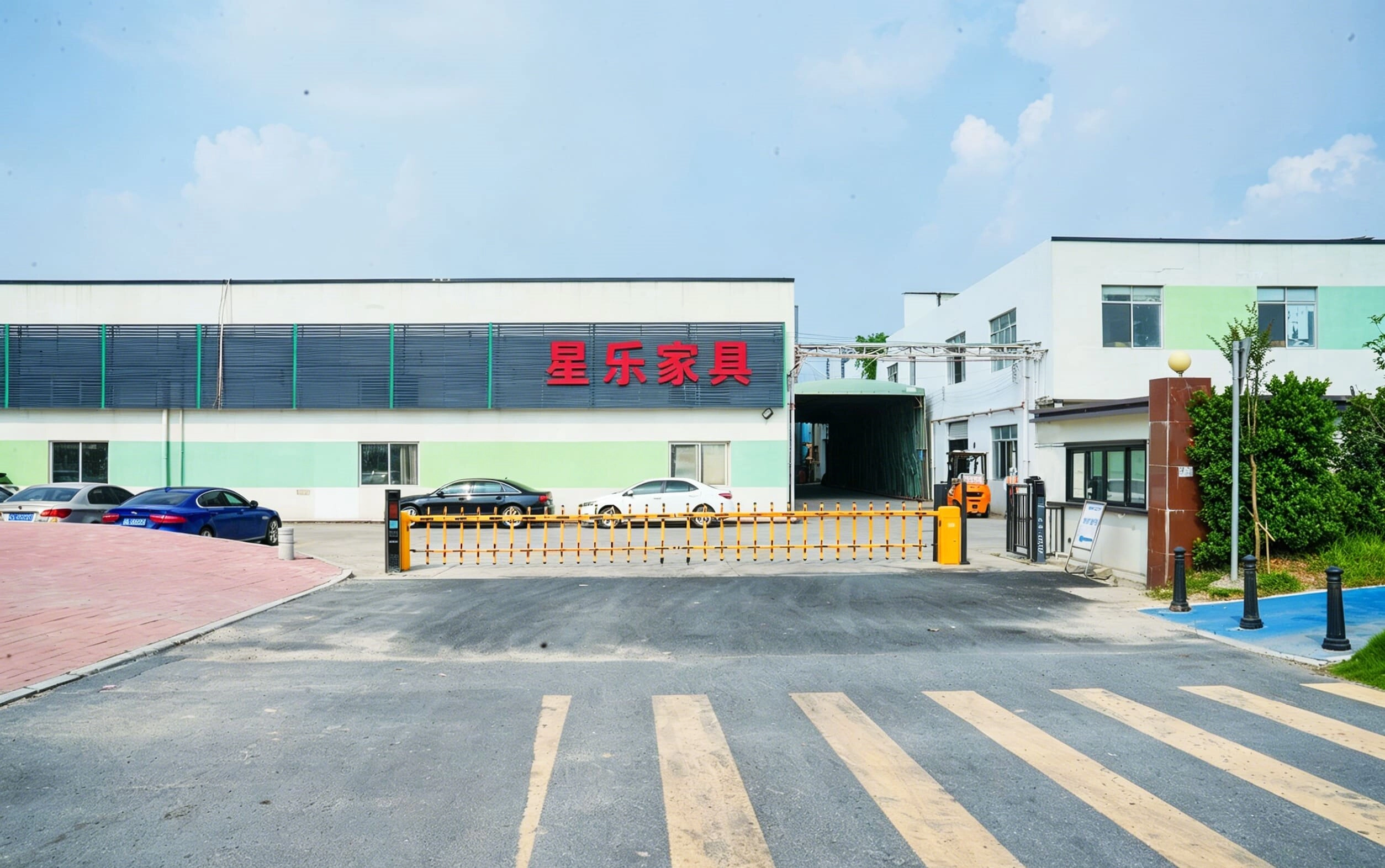
STARJOY Hotel Furniture is a Guangdong-based high-tech enterprise established in 2006, operating six specialized manufacturing plants across 56,000 square meters with over 570 staff. The company delivers a one-stop solution for commercial hospitality projects, covering hotel room furniture, public area furniture, lobby furniture, restaurant furniture, conference room furniture, outdoor resort furniture, and hotel apartment furniture. Core capabilities include OEM and ODM production, in-house R&D, and advanced manufacturing machinery sourced from German and Italian equipment suppliers — enabling precise execution of custom specifications at commercial project scale.
For procurement teams and project developers, STARJOY integrates research, production, sales, and service under one operational structure, reducing coordination risk across multi-category hotel fit-outs. Buyers need to confirm key parameters including room count and typology mix, furniture finish and material specifications, brand standard documentation, delivery phasing requirements, and any applicable regulatory compliance criteria. MOQ thresholds, production lead times, and project-specific quotations must be discussed directly based on confirmed project scope.
Discuss Your Hotel Room Furniture Project Requirements With STARJOY
To receive an accurate assessment and preliminary proposal, provide the following project details: hotel star rating and brand standard requirements, total room count and room type breakdown, preferred materials and finish directions, project location and delivery timeline, and any existing FF&E schedules or design drawings. STARJOY's team can discuss product category coverage, custom development options, production scheduling, and logistics coordination. Submit your project brief via the website at www.starjoyglobal.com or contact the project team directly at monica@starjoyglobal.com.
What Is the Difference Between Contract-Grade and Residential-Grade Hotel Room Furniture?
This distinction is one of the most consequential decisions in commercial hotel procurement, yet it remains poorly understood by first-time project developers. Contract-grade hotel room furniture is engineered specifically for high-rotation commercial environments where a single piece may be used by hundreds of different guests annually. The structural requirements are fundamentally different: frame joinery in contract seating is typically reinforced with corner blocks, steel brackets, or double-dowel construction, while residential pieces rely on simpler glue-and-staple assembly that degrades rapidly under commercial use cycles.
Material specifications also diverge significantly. Contract-grade casegoods — nightstands, dressers, wardrobes, and TV consoles — are commonly constructed using high-density particleboard or MDF substrates with commercial-grade laminates or veneer finishes rated for abrasion resistance. Residential equivalents use lighter substrates with decorative finishes that are not designed to withstand repeated cleaning with commercial-grade detergents. Upholstered pieces in contract environments must meet fabric rub-count thresholds — typically a minimum of 30,000 double rubs on the Wyzenbeek scale for standard hotel applications, with high-traffic seating areas requiring 50,000 or above. Specifying residential furniture in a commercial hotel context accelerates replacement cycles, increases total lifecycle cost, and creates operational disruption during peak occupancy periods.
Which Specific Furniture Pieces Are Required in Every Standard Hotel Guest Room?
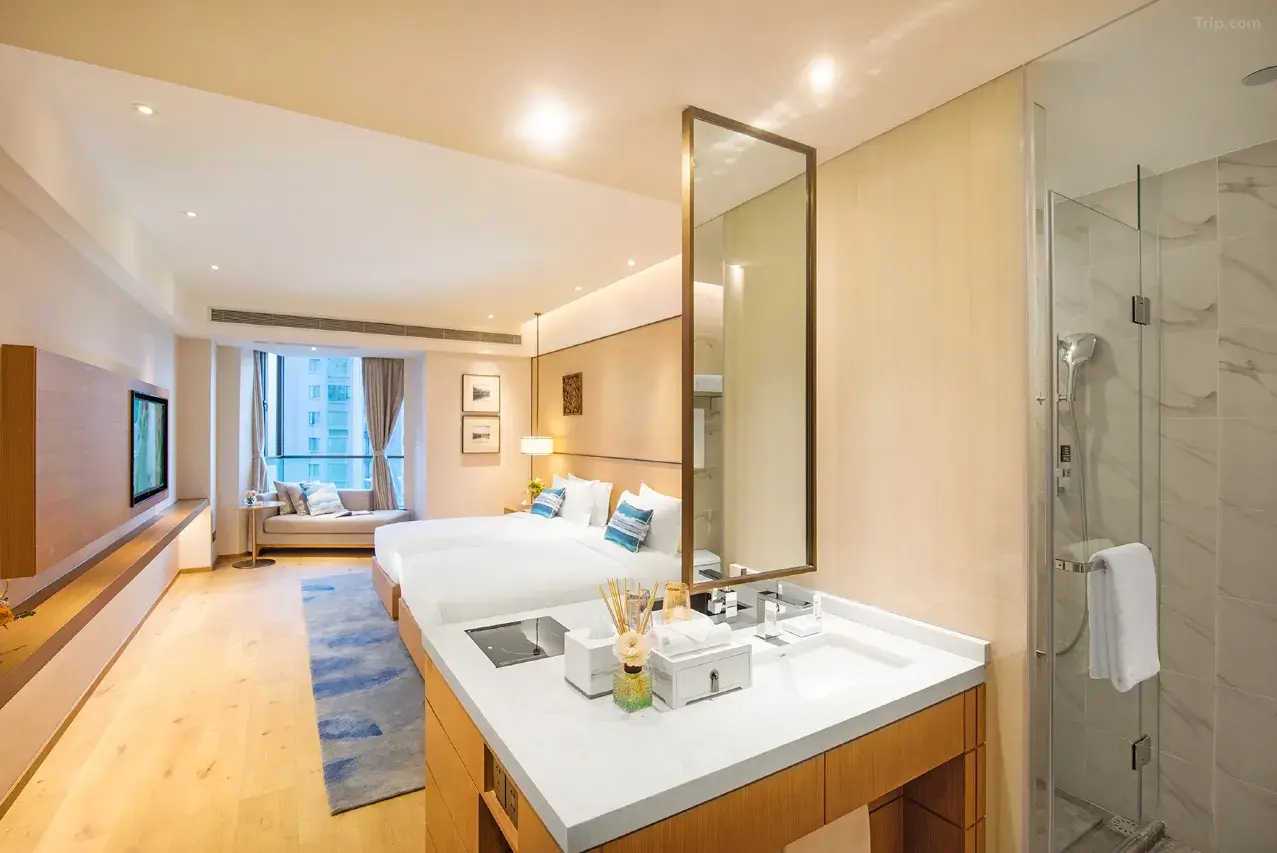
A standard hotel guest room has a defined core furniture package that procurement teams must account for regardless of star classification, though the specification depth varies considerably. The non-negotiable casegoods package includes the bed frame or platform base, nightstands or bedside tables, a dresser or chest of drawers, a wardrobe or closet unit, and a luggage rack or bench. The workspace component requires at minimum a writing desk and an ergonomic task chair, a requirement that has intensified with the growth of extended-stay and business travel segments. A lounge or accent chair with a side table is standard in mid-scale and above properties.
Lighting integration has become a structural furniture consideration rather than a purely electrical one — headboards are increasingly specified with integrated reading lights and USB/power outlet modules, which requires coordination between the furniture manufacturer and the MEP consultant during the design phase. The TV console or media unit must be dimensioned to accommodate the specified screen size with cable management provisions built into the casegood design. In properties targeting the upper-midscale segment and above, a full-length mirror — either freestanding or integrated into the wardrobe — is a standard specification item. Each of these pieces must be dimensionally coordinated against the room's architectural drawings to confirm clearances, particularly around egress paths and ADA or accessibility compliance zones where applicable.
How Does Hotel Star Rating Actually Determine Furniture Specification Depth?
Star classification functions as a proxy for guest expectation benchmarking, and it directly governs the material tier, construction method, and design complexity of hotel room furniture across a project. At the two- and three-star level, the specification priority is durability and operational efficiency — furniture is typically produced in standardized dimensions using commercial laminates, with minimal decorative detailing and a focus on ease of cleaning and replacement. The procurement logic at this tier is volume-driven, and furniture packages are often selected from manufacturer standard ranges with limited customization.
At the four-star level, the specification shifts toward brand differentiation. Custom finishes, proprietary hardware, and coordinated design languages across all room categories become standard expectations. Solid wood components or high-quality wood veneer over engineered substrates replace laminate surfaces in visible areas. Upholstered headboards with custom fabric or leather specifications become a primary design element rather than a functional afterthought. At the five-star and luxury independent level, furniture is almost exclusively custom-developed, often involving collaboration between the hotel brand's interior design team, a specialist FF&E designer, and the manufacturer's R&D department. Lead times at this tier extend accordingly — custom luxury hotel room furniture projects routinely require 16 to 24 weeks of production time, excluding shipping and installation, which must be factored into the project master schedule from the outset.
What Are the Most Overlooked Technical Specifications When Sourcing Hotel Room Furniture?
Procurement teams frequently focus on aesthetic specifications and unit pricing while underweighting several technical parameters that have significant downstream operational consequences. Surface finish durability is one of the most consistently overlooked areas. The abrasion resistance of casegood surfaces — measured by standards such as EN 15186 or equivalent — determines how quickly visible wear appears on high-contact areas like drawer fronts, desk surfaces, and wardrobe door edges. A finish that performs adequately in a showroom environment may show visible degradation within 18 months under commercial hotel use if the specification is not verified against commercial-use benchmarks.
Hardware load ratings are another critical but frequently unverified parameter. Drawer slides, hinge systems, and wardrobe hanging rails must be rated for the load cycles expected in a commercial environment. European hardware standards, such as those published by BLUM or Hettich, provide cycle-count ratings that allow procurement teams to compare hardware durability objectively. Formaldehyde emission compliance is a non-negotiable technical requirement in most markets — engineered wood substrates must meet E1 or stricter emission standards (such as CARB Phase 2 for projects destined for North American markets, or equivalent EU regulations for European projects). Failure to verify this at the sourcing stage creates regulatory and reputational risk. Finally, dimensional tolerance specifications — the acceptable variance in manufactured dimensions — must be confirmed in writing, as tolerances that are acceptable for residential furniture can create cumulative fit-out problems when hundreds of identical units are installed across a hotel floor plate.
How Should Commercial Projects Sequence the Hotel Room Furniture Procurement Process?
The procurement sequence for hotel room furniture in a commercial project is not simply a purchasing exercise — it is a critical path activity that, if mismanaged, directly delays hotel opening and increases project cost. The process should begin during the schematic design phase, not after construction documents are finalized. Early manufacturer engagement allows furniture dimensions to inform architectural detailing — particularly for built-in or semi-built-in elements like wardrobes, headboard walls, and desk alcoves — rather than forcing furniture to adapt to fixed architectural conditions after the fact.
Following schematic design alignment, the procurement sequence moves to FF&E specification development, where the design team produces detailed finish schedules, material samples, and dimensional drawings. This documentation forms the basis of the RFQ (Request for Quotation) issued to shortlisted manufacturers. Manufacturers should be evaluated not only on unit pricing but on their capacity to produce the required volume within the project's construction timeline, their quality control processes, their experience with comparable hotel projects, and their logistics capabilities for the delivery destination. Factory audits or third-party inspection provisions should be written into the supply contract for large-volume orders. The final procurement milestone — delivery and installation coordination — must be sequenced against the construction program to avoid furniture arriving before the building environment is conditioned, which can cause wood movement, finish damage, and upholstery contamination in uncontrolled site conditions.
What Furniture Categories Beyond the Guest Room Do Commercial Hotel Projects Require?
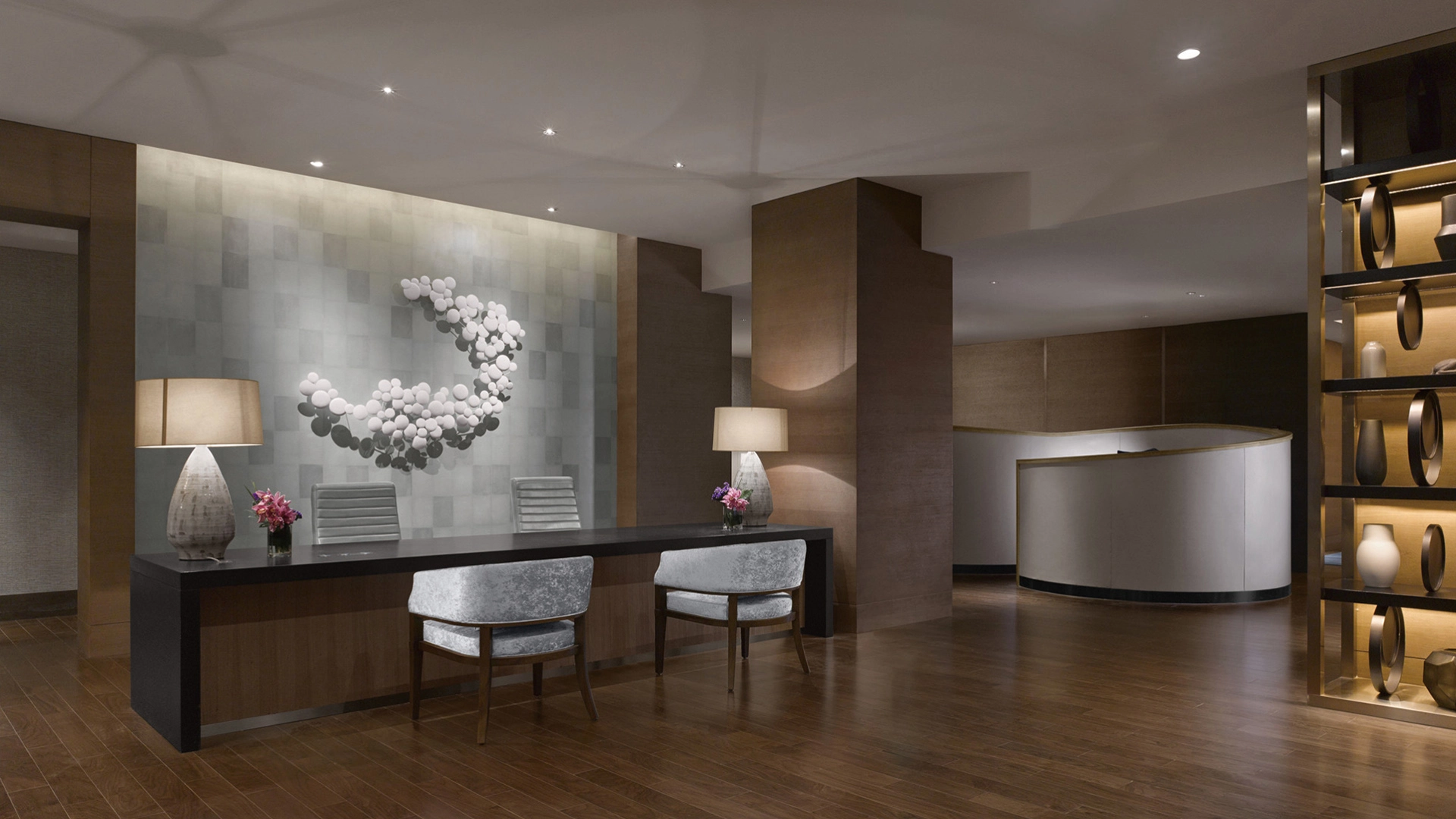
A common planning gap in early-stage hotel projects is the underestimation of furniture scope outside the guest room. The guest room package typically represents between 55% and 70% of the total hotel furniture budget on a mid-scale project, but the remaining categories are operationally critical and often more complex to specify. Hotel lobby furniture — including reception counters, lounge seating clusters, and feature pieces — must balance high aesthetic impact with the structural demands of continuous public use. Reception counters in particular involve coordination between the furniture manufacturer, the electrical contractor, and the technology integrator for power, data, and lighting provisions.
Food and beverage areas require restaurant furniture specified for commercial dining use — seating with frame constructions rated for stacking or repeated repositioning, table bases with leveling feet for uneven floor surfaces, and surface materials resistant to food-safe cleaning chemicals. Conference and meeting room furniture introduces a different specification set, including training tables with cable management, ergonomic conference chairs rated for extended seated use, and credenza or storage units integrated with AV provisions. Outdoor and resort areas require furniture manufactured from materials with verified weather resistance — marine-grade aluminum, teak, or high-density polyethylene (HDPE) — with UV stability ratings appropriate for the project's climate zone. Each of these categories has distinct lead times, installation requirements, and supplier qualification criteria that must be managed as separate workstreams within the overall FF&E procurement program.
FAQ
What is the difference between contract-grade and residential-grade hotel room furniture?
Contract-grade hotel room furniture is engineered for high-rotation commercial environments where a single piece may be used by hundreds of guests annually. It features reinforced frame joinery, commercial-grade laminates or veneers rated for abrasion resistance, and upholstery fabrics meeting minimum rub-count thresholds — typically 30,000 double rubs on the Wyzenbeek scale for standard hotel applications. Residential furniture uses lighter substrates and simpler assembly methods that degrade rapidly under commercial use cycles, increasing lifecycle costs and operational disruption.
Which specific furniture pieces are required in every standard hotel guest room?
Every standard hotel guest room requires a core casegoods package: bed frame or platform base, nightstands, dresser or chest of drawers, wardrobe or closet unit, and a luggage rack or bench. A writing desk and task chair are standard workspace components. A lounge or accent chair with side table is expected at mid-scale and above. Headboards increasingly integrate reading lights and power outlets, and a TV console with cable management is a standard specification item. All pieces must be dimensionally coordinated against architectural drawings for clearance and accessibility compliance.
How does hotel star rating actually determine furniture specification depth?
Star classification directly governs the material tier, construction method, and design complexity of hotel room furniture. Two- and three-star projects prioritize durability and operational efficiency using standardized dimensions and commercial laminates. Four-star projects require custom finishes, proprietary hardware, and coordinated design languages, with solid wood or veneer replacing laminate in visible areas. Five-star and luxury projects involve fully custom furniture developed collaboratively between the brand's design team and the manufacturer's R&D department, with production lead times typically ranging from 16 to 24 weeks, excluding shipping and installation.
What are the most overlooked technical specifications when sourcing hotel room furniture?
The most overlooked technical specifications include surface finish abrasion resistance measured against standards such as EN 15186, hardware load ratings for drawer slides and hinge systems, formaldehyde emission compliance (E1 or CARB Phase 2 for relevant markets), and dimensional tolerance specifications. Hardware cycle-count ratings from suppliers allow objective durability comparisons. Emission compliance must be verified at the sourcing stage to avoid regulatory and reputational risk. Dimensional tolerances that are acceptable for residential furniture can create cumulative fit-out problems when hundreds of identical units are installed across a hotel floor plate.
How should commercial projects sequence the hotel room furniture procurement process?
Hotel room furniture procurement should begin during the schematic design phase to allow furniture dimensions to inform architectural detailing. The sequence moves to FF&E specification development, producing finish schedules, material samples, and dimensional drawings for the RFQ process. Manufacturers should be evaluated on production capacity, quality control processes, project experience, and logistics capabilities — not unit pricing alone. Factory audits or third-party inspection provisions should be written into supply contracts for large orders. Delivery must be sequenced against the construction program to avoid furniture arriving before the building environment is conditioned.
What furniture categories beyond the guest room do commercial hotel projects require?
Beyond the guest room — which typically represents 55% to 70% of the total hotel furniture budget on a mid-scale project — commercial hotel projects require lobby furniture (reception counters, lounge seating), restaurant and food and beverage furniture (commercial dining chairs, tables with leveling bases), conference and meeting room furniture (tables with cable management, ergonomic chairs, AV-integrated credenzas), and outdoor or resort furniture specified from weather-resistant materials such as marine-grade aluminum, teak, or HDPE with appropriate UV stability ratings. Each category has distinct lead times, installation requirements, and supplier qualification criteria.
Starjoy Furniture Wins Multiple Authoritative Honors, Becomes Core Supplier of Top Hotel Brands

Integrating Tech: Power Outlets in Bespoke Furniture for Hotel Rooms
The Art of Craftsmanship: Durable and Stylish Custom Hotel Dining Tables and Chairs
How Custom Built-in Furniture for Hotel Rooms Maximizes Boutique Space
Fire Retardant Standards for Upholstered Furniture for Hotel Rooms and Bedding
About Products and Services
How do you handle international logistics and transportation?
We provide a seamless global supply chain experience. Partnering with top-tier carriers like MAERSK and MSC, we offer flexible shipping terms (FOB, CIF, DDP). Every item is secured in 5-layer reinforced international packaging with edge protection to ensure zero-damage delivery to your project site.
Are your products expensive?
We offer competitive factory-direct pricing through value engineering. By optimizing material selection and production processes without compromising on 5-star quality, we provide a high ROI for your project. We balance cost-efficiency with the durability required for high-traffic hospitality environments
Products
What are the payment terms and shipping terms?
We mainly do TT and FOB, other terms can also be discussed in detail.
What is your Minimum Order Quantity (MOQ)?
As a project-based manufacturer, we focus on full-set room solutions. While we are flexible, we typically recommend a minimum of 30–50 rooms to optimize shipping costs and production efficiency for custom FF&E.
Do you have experience with shipping and compliance in our region?
Yes. STARJOY has a mature export system covering the USA, UAE, and Southeast Asia. We are familiar with local import policies and ensure all furniture meets regional safety and environmental standards.
Get in Touch
We strive to provide the most thoughtful service, excellent quality and value to every customer who customizes hotel furniture from STARJOY. If you have any questions about your order, please contact us.

No.19, Gulou Industrial Zone, Jianggao Town, Baiyun District, Guangzhou
monica@starjoyglobal.com


