

Why Does Hotel Room Furniture Impact Brand Identity?
This deep-dive FAQ blog post explores how hotel room furniture directly shapes brand identity, guest perception, and long-term loyalty. It covers the strategic role of custom hotel furniture in communicating brand values, the psychological impact of material and design choices, and how procurement decisions affect brand consistency across properties. STARJOY's manufacturing capabilities and project support are introduced for high-intent B2B buyers.
- Quick Answer
- How STARJOY Supports Hotel Room Furniture Projects
- Discuss Your Hotel Brand Furniture Requirements With STARJOY
- How Does Furniture Design Communicate a Hotel Brand's Positioning to First-Time Guests?
- Why Do Inconsistent Furniture Specs Across Properties Damage Brand Equity Over Time?
- What Role Does Material Selection Play in Conveying Luxury Versus Budget Brand Tiers?
- How Does Custom Hotel Furniture Differ From Standard Commercial Furniture in Brand Impact?
- Can Furniture Layout and Scale Affect How Guests Perceive a Brand's Attention to Detail?
- Why Is the Headboard the Most Brand-Critical Piece of Hotel Room Furniture?
- FAQ
Quick Answer
Hotel room furniture is one of the most powerful physical expressions of a brand's identity — it communicates positioning, quality standards, and design philosophy before a guest reads a single word of marketing copy. For procurement managers and hotel developers sourcing custom hotel furniture, the key selection factors include material grade and finish consistency, dimensional alignment with room architecture, brand color and texture integration, durability under commercial use cycles, and ergonomic performance. Final specifications must always be validated against individual property layouts, brand standards manuals, and local compliance requirements.
How STARJOY Supports Hotel Room Furniture Projects
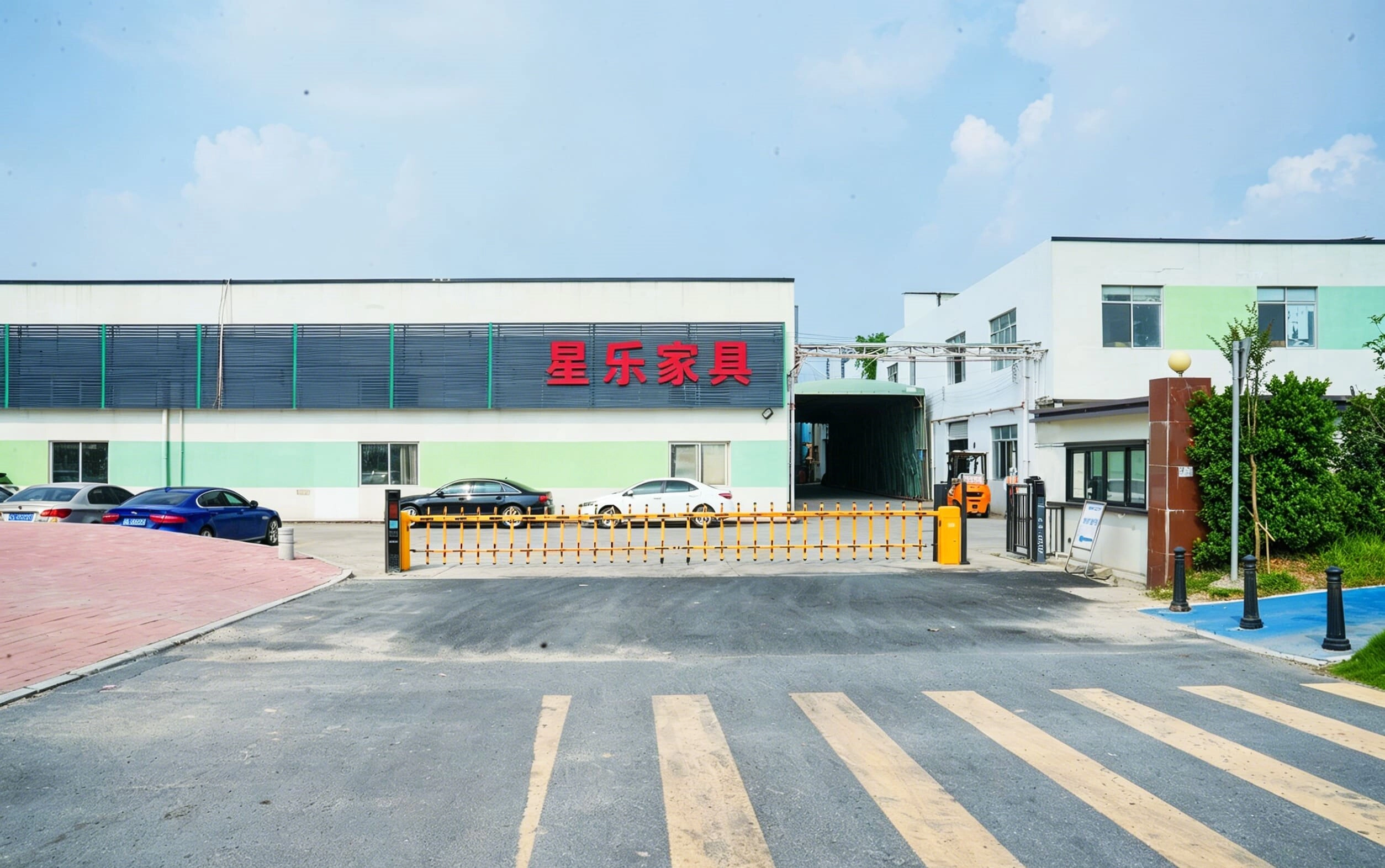
STARJOY is a Guangdong-based high-tech enterprise established in 2006, operating six specialized manufacturing plants across 56,000 square meters with over 570 staff. The company delivers OEM and ODM solutions for full hotel room furniture packages — including casegoods, upholstered seating, wardrobes, partitions, and profile systems — all produced with advanced machinery sourced from German and Italian manufacturers. With nearly 20 years of commercial project experience, STARJOY integrates research, production, sales, and on-site service into a single-source supply model that reduces coordination risk for large-scale hotel rollouts.
Buyers evaluating STARJOY for brand-aligned furniture projects should confirm core parameters including room quantity and typology, brand standards documentation, preferred substrate and finish specifications, delivery phasing requirements, and installation scope. MOQ thresholds, production lead times, and project-specific quotations are determined on a per-project basis and must be discussed directly with the project team.
Discuss Your Hotel Brand Furniture Requirements With STARJOY
To receive an accurate project assessment, please prepare the following information: total room count and hotel category, brand standards or design concept references, preferred materials and finish directions, project location and delivery timeline, installation requirements, and any existing FF&E specifications. STARJOY's team can discuss OEM production options, custom finish development, phased delivery scheduling, and full-package supply coordination. Submit your project brief at www.starjoyglobal.com or send detailed requirements directly to monica@starjoyglobal.com.
How Does Furniture Design Communicate a Hotel Brand's Positioning to First-Time Guests?
Brand positioning is an abstract concept until a guest physically enters a hotel room. At that moment, the furniture becomes the primary sensory medium through which positioning is communicated. A luxury brand that invests in hand-stitched leather headboards, solid hardwood casegoods with dovetail joinery, and brushed brass hardware is making a tangible argument about its price tier and service philosophy — one that no digital advertisement can replicate with the same credibility. Conversely, a select-service brand using laminate-faced panel furniture with clean geometric lines and neutral tones is communicating efficiency, accessibility, and modernity without a single word.
The critical mechanism here is what hospitality design researchers refer to as environmental congruence — the degree to which the physical environment matches the brand promise communicated in pre-arrival marketing. When furniture design is incongruent with brand messaging, guests experience a form of cognitive dissonance that directly erodes trust and reduces the likelihood of return visits. Studies in servicescape theory, particularly work building on Bitner's foundational 1992 framework, consistently demonstrate that physical environment cues — including furniture scale, material quality, and spatial arrangement — are processed by guests as direct proxies for service quality before any human interaction occurs. For hotel developers and brand managers, this means furniture procurement decisions are not interior design choices alone; they are brand communication decisions with measurable commercial consequences.
Why Do Inconsistent Furniture Specs Across Properties Damage Brand Equity Over Time?
Multi-property hotel brands face a specific and often underestimated risk: specification drift. This occurs when individual properties — whether through renovation cycles, regional procurement decisions, or supplier substitutions — gradually diverge from the brand's original furniture standards. The result is a portfolio where the same brand name delivers materially different physical experiences depending on location, which systematically undermines the reliability expectation that drives loyalty program enrollment and repeat bookings.
Brand equity in hospitality is substantially built on predictability. Guests who choose a branded property over an independent hotel are, in part, paying a High Quality for the assurance of a known experience. When furniture quality, finish consistency, or spatial configuration varies significantly between properties, that High Quality becomes difficult to justify. The damage compounds over time because online review platforms aggregate guest feedback at the brand level as well as the property level — a guest who encounters substandard furniture at one location will often reference the brand in their review, not just the individual hotel. For procurement teams managing multi-site rollouts, this underscores the commercial importance of working with manufacturers capable of maintaining consistent production specifications across large batch orders and extended project timelines, including consistent substrate sourcing, finish batch matching, and dimensional tolerancing.
What Role Does Material Selection Play in Conveying Luxury Versus Budget Brand Tiers?
Material selection is the single most legible signal of brand tier in hotel room furniture, and it operates on both conscious and subconscious levels for guests. At the luxury tier, materials are chosen not only for their aesthetic properties but for their tactile and acoustic qualities — solid wood species with visible grain variation, natural stone surfaces, full-grain leather upholstery, and metal hardware with weight and precision finish all contribute to a sensory experience that communicates investment and craftsmanship. These materials also age in ways that reinforce their quality narrative; a solid oak credenza develops patina over time, while a low-grade laminate surface chips and delaminates, visually signaling neglect regardless of actual maintenance effort.
At mid-scale and economy tiers, the design challenge is different but equally strategic. The goal is not to simulate luxury materials — a practice that consistently fails because guests are more perceptive than brands often assume — but rather to select materials that honestly communicate the brand's value proposition. High-pressure laminate in contemporary patterns, powder-coated steel frames, and performance-grade fabrics can communicate clean, modern efficiency with integrity when they are specified and detailed with intentionality. The critical error many budget-tier procurement teams make is selecting materials based solely on unit cost without considering the rate of visible degradation under commercial use cycles, which ultimately produces a guest experience that communicates neglect rather than value. Material durability data — including abrasion resistance ratings, substrate density specifications, and finish adhesion standards — should be core inputs in any brand-tier furniture specification process.
How Does Custom Hotel Furniture Differ From Standard Commercial Furniture in Brand Impact?
Standard commercial furniture is designed to meet broad functional requirements across multiple industry contexts — it is optimized for procurement efficiency and catalog availability, not for brand specificity. Custom hotel furniture, by contrast, is engineered to fulfill a defined brand brief, which means every dimensional, material, and finish decision is made in reference to a specific brand identity rather than a generic market average. This distinction has direct consequences for brand impact.
When a hotel brand specifies custom casegoods, the headboard profile, the drawer pull geometry, the nightstand height, and the finish color are all deliberate extensions of the brand's visual language. These details create a coherent design vocabulary that guests subconsciously associate with the brand across multiple touchpoints. Standard commercial furniture, even when well-selected, introduces design elements that belong to no particular brand — they are neutral by design, which means they contribute nothing to brand differentiation. For brands operating in competitive markets where physical experience is a primary differentiator, the incremental cost of custom specification is typically justified by the brand equity it builds and the reduction in guest experience variance it produces. Custom manufacturing also enables brands to specify materials and construction methods that align with sustainability commitments or regional sourcing preferences, which are increasingly relevant to the brand identity of upper-midscale and luxury operators.
Can Furniture Layout and Scale Affect How Guests Perceive a Brand's Attention to Detail?
Furniture layout and scale are among the most technically complex aspects of hotel room design, and they have a direct and measurable impact on how guests perceive a brand's operational sophistication. A room where furniture is correctly scaled to the architectural envelope — where clearances between pieces allow natural movement, where the bed's visual weight is proportional to the room's ceiling height, and where functional zones are logically organized — communicates that the brand has invested in the guest's physical comfort at a detailed level. A room where furniture is oversized, awkwardly placed, or dimensionally inconsistent with the architecture communicates the opposite, regardless of the individual quality of each piece.
This is particularly consequential in smaller room typologies, which are increasingly common in urban markets where land costs compress net room areas. In these contexts, furniture scale and layout planning require a level of precision that goes beyond standard FF&E specification — it requires close coordination between the furniture manufacturer, the interior designer, and the project architect to ensure that each piece functions correctly within its specific spatial context. Brands that invest in this coordination process consistently produce rooms that feel more generous and more considered than their square footage would suggest, which translates directly into higher guest satisfaction scores and stronger brand perception metrics. Manufacturers with direct project engineering capabilities — rather than catalog-only supply models — are substantially better positioned to support this level of coordination.
Why Is the Headboard the Most Brand-Critical Piece of Hotel Room Furniture?
The headboard occupies a unique position in hotel room furniture specification because it is simultaneously the room's dominant visual focal point, the primary photographic subject in marketing imagery, and the piece most directly associated with the guest's sleep experience — the core functional promise of any hotel. No other single furniture element concentrates this combination of visual, marketing, and experiential significance, which is why headboard design decisions carry disproportionate weight in brand identity formation.
From a visual standpoint, the headboard is typically the first element a guest sees upon entering the room, and it anchors the entire design composition. Its profile, upholstery material, tufting pattern, panel configuration, integrated lighting detail, and dimensional relationship to the bed and wall all communicate brand character with immediate legibility. Luxury brands frequently use the headboard as the room's primary craft statement — a piece where material quality and construction complexity are most visible and most appreciated by the target guest. Lifestyle brands use headboard design to communicate aesthetic identity, often incorporating brand-specific silhouettes or material combinations that become recognizable across the portfolio. Even at economy tiers, the headboard's condition and design integrity have an outsized impact on guest perception of room quality relative to its cost as a component. For procurement teams, this means headboard specification warrants a level of design and engineering investment that is not proportional to its unit cost alone, but to its strategic role in the brand's physical identity system.
FAQ
How Does Furniture Design Communicate a Hotel Brand's Positioning to First-Time Guests?
Hotel room furniture is one of the most powerful physical expressions of a brand's identity, communicating positioning and quality standards before a guest reads any marketing copy. The critical mechanism is environmental congruence — when furniture design matches brand messaging, guests experience trust and are more likely to return. When incongruent, guests experience cognitive dissonance that erodes trust. Servicescape theory demonstrates that physical environment cues, including furniture scale, material quality, and spatial arrangement, are processed as direct proxies for service quality before any human interaction occurs.
Why Do Inconsistent Furniture Specs Across Properties Damage Brand Equity Over Time?
Multi-property hotel brands face specification drift — when individual properties diverge from original furniture standards through renovation cycles or supplier substitutions, delivering materially different physical experiences by location. Brand equity in hospitality is built substantially on predictability; guests pay a premium for a known experience. When furniture quality or finish consistency varies significantly between properties, that premium becomes difficult to justify. Online review platforms aggregate feedback at the brand level, meaning substandard furniture at one location can damage the entire brand's reputation. Procurement teams managing multi-site rollouts must work with manufacturers capable of maintaining consistent production specifications across large batch orders.
What Role Does Material Selection Play in Conveying Luxury Versus Budget Brand Tiers?
Material selection is the single most legible signal of brand tier in hotel room furniture. At the luxury tier, solid wood species, natural stone surfaces, full-grain leather upholstery, and precision metal hardware communicate investment and craftsmanship through tactile and aesthetic qualities. At mid-scale and economy tiers, the goal is not to simulate luxury but to select materials that honestly communicate the brand's value proposition with integrity. The critical error many budget-tier procurement teams make is selecting materials based solely on unit cost without considering the rate of visible degradation under commercial use cycles, which communicates neglect rather than value.
How Does Custom Hotel Furniture Differ From Standard Commercial Furniture in Brand Impact?
Standard commercial furniture is optimized for procurement efficiency and catalog availability, not brand specificity. Custom hotel furniture is engineered to fulfill a defined brand brief, where every dimensional, material, and finish decision references a specific brand identity. Custom specification creates a coherent design vocabulary that guests associate with the brand across multiple touchpoints. Standard commercial furniture introduces design elements that belong to no particular brand, contributing nothing to brand differentiation. Custom manufacturing also enables brands to specify materials aligned with sustainability commitments or regional sourcing preferences, increasingly relevant to upper-midscale and luxury operators.
Can Furniture Layout and Scale Affect How Guests Perceive a Brand's Attention to Detail?
Furniture layout and scale directly impact how guests perceive a brand's operational sophistication. A room where furniture is correctly scaled to the architectural envelope — with appropriate clearances, proportional visual weight, and logically organized functional zones — communicates that the brand has invested in the guest's physical comfort. This is particularly consequential in smaller urban room typologies where precision is critical. Brands that invest in coordination between furniture manufacturer, interior designer, and project architect consistently produce rooms that feel more generous and considered than their square footage suggests, translating into higher guest satisfaction scores and stronger brand perception metrics.
Why Is the Headboard the Most Brand-Critical Piece of Hotel Room Furniture?
The headboard is simultaneously the room's dominant visual focal point, the primary photographic subject in marketing imagery, and the piece most directly associated with the guest's sleep experience. No other single furniture element concentrates this combination of visual, marketing, and experiential significance. Its profile, upholstery material, tufting pattern, panel configuration, integrated lighting detail, and dimensional relationship to the bed and wall all communicate brand character immediately. Luxury brands use the headboard as the room's primary craft statement; lifestyle brands use it to communicate aesthetic identity with brand-specific silhouettes. Even at economy tiers, the headboard's condition and design integrity have an outsized impact on guest perception of room quality relative to its cost.
Starjoy Furniture Wins Multiple Authoritative Honors, Becomes Core Supplier of Top Hotel Brands

Integrating Tech: Power Outlets in Bespoke Furniture for Hotel Rooms
The Art of Craftsmanship: Durable and Stylish Custom Hotel Dining Tables and Chairs
How Custom Built-in Furniture for Hotel Rooms Maximizes Boutique Space
Fire Retardant Standards for Upholstered Furniture for Hotel Rooms and Bedding
Hotel Guest Room Furniture
How long does custom hotel guest room furniture production take?
The timeline depends on project quantity, furniture complexity, material confirmation, sample requirements, and delivery schedule.The production lead time for painted products is generally 40–45 days, while for pre-finished (paint-free) boards, it is typically 25–30 days.
Products
How do you price "Mock-up Room" furniture?
Mock-ups are typically priced at 2x the unit cost due to one-off production setups. However, for 5-star projects, this cost is often credited back or discounted once the full-batch order is signed.
About Products and Services
What are the main qualifications and honors of your company?
Our company is a member of the Guangdong Building Decoration Materials Association and has many years of professional experience in developing, designing and producing hotel furniture and supporting product. We have won many honors such as the top 10 in China's hotel furniture industry.
How do you ensure the quality of your products?
Our quality control follows a rigorous multi-stage inspection process. All furniture is manufactured to meet international hospitality standards (ISO 9001/14001 certified). We also ensure compliance with specific safety and environmental regulations, such as CAL 117 or BS 5852 fire retardancy standards, ensuring each piece is both safe and durable for global markets
If there is a problem with the product, what after-sales service do you provide?
We provide comprehensive after-sales service, including return and exchange of product quality problem, repair, etc. If you encounter any problems during use, you can contact our customer service team at any time and we will solve it for you as soon as possible.
Get in Touch
We strive to provide the most thoughtful service, excellent quality and value to every customer who customizes hotel furniture from STARJOY. If you have any questions about your order, please contact us.

No.19, Gulou Industrial Zone, Jianggao Town, Baiyun District, Guangzhou
monica@starjoyglobal.com


