

Designing Functional Workspaces in Luxury Hotel Rooms
- Understanding Guest Work Needs in Luxury Rooms
- 1. Who uses in-room workspaces and why
- 2. Core user requirements
- 3. Differentiation by room category
- Design Principles for Functional Workspaces
- 1. Ergonomics and human-centered design
- 2. Lighting and visual comfort
- 3. Acoustics, privacy and spatial layout
- Furniture Selection and Custom Solutions
- 1. Choosing the right desk typologies
- 2. Seating: ergonomics meets aesthetics
- 3. Custom hotel furniture advantages
- Comparative table: desk and seating options
- Technology, Sustainability and Operations
- 1. Integrated power and connectivity
- 2. Materials, durability and sustainability
- 3. Housekeeping and maintenance considerations
- Procurement, Project Delivery and Starjoy Profile
- 1. Procurement best practices for hotel projects
- 2. Production, lead times and quality control
- 3. Starjoy Hotel Furniture — integrated supplier profile
- Measuring Success and Guest Feedback
- 1. KPIs to track
- 2. A/B testing and pilot rooms
- 3. Guest communication and upselling
- FAQ
- 1. What defines luxury hotel furniture for workspaces?
- 2. Can small rooms accommodate functional workspaces?
- 3. What are typical lead times for custom hotel furniture?
- 4. How to balance aesthetics with durability and maintenance?
- 5. Are there sustainability considerations when sourcing hotel furniture?
- 6. How important is technology integration for in-room workspaces?
- Contact and Next Steps
In an era where business travel, remote work and blended leisure demand converge, luxury hotel rooms must balance elegance with practicality. Designing functional workspaces in luxury hotel rooms involves ergonomic considerations, intelligent furniture selection, integrated technology and a guest-centric mindset. This article provides evidence-based guidance, product comparisons, and procurement insights—grounded in industry standards and real project experience—to help hotel operators, interior designers, and purchasing teams deliver work-ready luxury environments that enhance guest satisfaction and generate incremental revenue.
Understanding Guest Work Needs in Luxury Rooms
1. Who uses in-room workspaces and why
Business travelers, digital nomads, hybrid workers and executives require spaces that support concentration, privacy and productivity. Recent hospitality trend analyses emphasize the rise of long-stay and bleisure travel segments; operators must respond with rooms that serve both rest and work functions. For context on workplace trends and hospitality shifts, see discussions by Hospitality Net (hospitalitynet.org) and broader ergonomics principles on Wikipedia.
2. Core user requirements
From primary research and project experience, common guest needs include: a comfortable desk and task chair with proper ergonomics, reliable power and USB charging, adjustable lighting, acoustic privacy, surface area for laptops and paperwork, and secure connectivity. Responding to these needs reduces friction and increases positive guest reviews and loyalty.
3. Differentiation by room category
Luxury hotel furniture strategy should be tiered: junior suites may include dedicated desks and lounge-work zones, while presidential suites can incorporate full private offices or convertible meeting areas. Custom hotel furniture enables modularity across room types while maintaining a consistent brand aesthetic.
Design Principles for Functional Workspaces
1. Ergonomics and human-centered design
Adopt ergonomic standards such as ISO 9241 for human-centred design (ISO 9241). Recommended dimensions used in hospitality projects: desk height ~73–75 cm, task chair seat height adjustable ~40–52 cm, and adequate knee clearance ~60 cm. These guidelines help reduce guest discomfort and support longer productive sessions.
2. Lighting and visual comfort
Layered lighting—ambient, task, and accent—is essential. Task lighting with adjustable color temperature (2700–4000K) and dimming delivers visual comfort and supports varied activities. Studies show appropriate lighting improves productivity and mood; for human-centric lighting insights see the World Green Building Council (worldgbc.org).
3. Acoustics, privacy and spatial layout
Soft furnishings, acoustic panels and strategic spatial separation reduce noise intrusion. For small rooms, consider floating desks with acoustic screens or integrated partition solutions to create perceived separation without sacrificing space. Acoustic performance is measurable—aim for a balanced reverberation time and speech privacy appropriate to the room type.
Furniture Selection and Custom Solutions
1. Choosing the right desk typologies
Common desk types for luxury rooms include: compact writing desks, floating fold-down desks, integrated bedside work surfaces, and full executive desks in suites. Material selection—solid wood veneered panels, laminates with anti-scratch finishes, or engineered composites—affects durability and maintenance costs. Luxury hotel furniture should balance tactile quality with ease of cleaning and longevity.
2. Seating: ergonomics meets aesthetics
Task chairs for hotel rooms must be compact but supportive. Look for adjustable lumbar support, swivel bases, casters suitable for hotel carpets and designer finishes that align with room aesthetics. Where space is limited, a multi-function lounge chair with a supportive work posture can be an alternative.
3. Custom hotel furniture advantages
Custom solutions allow precise fit, brand consistency and integrated features like cable management, concealed power modules, biomaterial upholstery, and antimicrobial finishes. For procurement teams, working with experienced hotel furniture manufacturers and a hotel furniture factory reduces coordination risk and ensures lead-time predictability.
Comparative table: desk and seating options
| Option | Best for | Pros | Cons |
|---|---|---|---|
| Compact writing desk | Standard rooms | Low footprint, cost-effective | Limited surface area |
| Floating/fold-down desk | Small rooms, flexible layouts | Space-saving, modern | Less storage |
| Executive desk | Suites, VIP rooms | Generous surface, prestige | High cost, space requirement |
| Task chair | All categories | Ergonomic support, adjustable | Higher unit cost |
| Multi-function lounge chair | Compact luxury | Stylish, comfortable | Less task support |
Data sources and best practice references: ISO guidance on ergonomics (ISO 9241) and hospitality industry commentary on workspace trends (Hospitality Net).
Technology, Sustainability and Operations
1. Integrated power and connectivity
Guests expect multiple power outlets, USB-A/USB-C ports and high-speed Wi‑Fi. Consider built-in power modules with surge protection and lockable cable channels to reduce wear. For meeting-ready rooms, include a single HDMI/USB-C docking point to streamline guest device connection.
2. Materials, durability and sustainability
Sustainable materials (FSC-certified wood, low-VOC finishes, recycled composites) reduce environmental impact and appeal to eco-conscious guests. Certifications and green building guidance can be found via the World Green Building Council. Durable finishes reduce total cost of ownership—an important procurement metric for wholesale hotel furniture buyers and hotel furniture manufacturers.
3. Housekeeping and maintenance considerations
Select materials and construction methods that simplify cleaning and minimize downtime. Modular furniture allows quick replacement of high-wear components. For inventory and spare-part strategies, collaborate with your supplier or hotel furniture factory to ensure lead times and stock availability match operational needs.
Procurement, Project Delivery and Starjoy Profile
1. Procurement best practices for hotel projects
For large fit-outs, centralize specifications and use BIM/CAD models to coordinate furniture footprints with MEP and lighting. Pre-qualify hotel furniture manufacturers for quality systems, production capacity and lead-time commitments. Evaluate vendors on warranty terms, MOQ flexibility and ability to deliver custom hotel furniture at scale.
2. Production, lead times and quality control
Manufacturing capacity, workshop specialization and machinery quality determine delivery reliability. Request factory audits and production samples. Certifications, third-party testing and demonstrated project experience reduce supply risk.
3. Starjoy Hotel Furniture — integrated supplier profile
Starjoy Hotel Furniture is a high-tech enterprise in Guangdong and an innovative SME, offering a one-stop solution for commercial hotel furniture projects. Established in 2006 in Guangzhou, Starjoy integrates research, production, sales and service with nearly 20 years of project experience. The company spans 56,000 square meters, employs over 570 staff, and operates six manufacturing plants and one product showroom, including Starjoy Partition Factory, Screen Factory, Panel Factory, Wardrobe Factory, Chair and Sofa Factory, and Profile Factory.
Starjoy leverages advanced machinery from German and Italian manufacturers and mainly produces various hotel furniture products, including hotel room furniture, hotel public area furniture, hotel restaurant furniture, hotel lobby furniture, hotel conference room furniture, resort hotel outdoor furniture and hotel apartment furniture. The company’s vertical integration enables consistent quality control, competitive lead times and scalable custom hotel furniture solutions tailored to luxury brands. For more details and project inquiries, visit https://www.starjoyglobal.com/ or email Monica at monica@starjoyglobal.com.
Key competitive advantages: deep project experience since 2006, broad in-house production capabilities across multiple specialized factories, investment in advanced European machinery, and a product range that spans hotel furniture manufacturers, wholesale hotel furniture, custom hotel furniture and hotel furniture factory services. These strengths make Starjoy a reliable partner for operators seeking turnkey solutions that meet luxury standards and operational realities.
Measuring Success and Guest Feedback
1. KPIs to track
Track occupancy, average daily rate (ADR), guest satisfaction scores related to in-room workspace (use post-stay surveys), usage metrics (Wi‑Fi session durations, requests for meeting spaces), and maintenance/repair incidents for furniture. Improvements in these KPIs after workspace upgrades indicate ROI.
2. A/B testing and pilot rooms
Run pilots with differing workspace setups (e.g., task-chair + desk vs. lounge workstation) and compare guest satisfaction and operational metrics. Small, controlled trials reduce rollout risk and refine specifications before large orders with hotel furniture manufacturers.
3. Guest communication and upselling
Inform guests of in-room business amenities via pre-arrival emails and in-room collateral. Offer editable work packages (printer access, meeting room hours) as ancillary revenue streams—data from hospitality operators indicates ancillary offerings improve ARPAR (average revenue per available room).
FAQ
1. What defines luxury hotel furniture for workspaces?
Luxury hotel furniture combines High Quality materials, refined finishes and ergonomic design with functionality. In workspaces, it means thoughtfully scaled desks, supportive seating, integrated power and discreet cable management—plus finishes that communicate brand quality and durability.
2. Can small rooms accommodate functional workspaces?
Yes. Use space-saving solutions such as fold-down desks, floating work surfaces, multi-function furniture and integrated storage. Acoustic screens and focused task lighting help create a sense of separation in compact footprints.
3. What are typical lead times for custom hotel furniture?
Lead times vary by complexity and order size. Simple custom items may take 8–12 weeks; larger projects often require 12–20 weeks, including prototyping and approvals. Working with an integrated hotel furniture factory like Starjoy can reduce coordination delays and improve schedule certainty.
4. How to balance aesthetics with durability and maintenance?
Select robust finishes (e.g., high-pressure laminates, protected veneers), modular components for quick replacement, and fabrics with high abrasion ratings and stain resistance. Engage housekeeping teams early to align specifications with cleaning protocols.
5. Are there sustainability considerations when sourcing hotel furniture?
Yes. Specify FSC-certified wood, low-VOC finishes, recycled materials, and durable construction to minimize lifecycle impact. Suppliers with environmental certifications and transparent supply chains support sustainability goals.
6. How important is technology integration for in-room workspaces?
Very important. Reliable Wi‑Fi, multiple charging options, easy connectivity points and, where appropriate, video-conferencing support are essential for modern business travelers. Simplicity and reliability trump flashy tech that is hard to use.
Contact and Next Steps
If you are planning a room refresh or new-build project and need a partner for luxury, functional workspaces, consider a supplier with integrated capabilities. Starjoy Hotel Furniture combines nearly two decades of project experience, in-house factories and advanced machinery to deliver tailored solutions for hotel room furniture, public areas, restaurants, lobbies and more. Explore product ranges and case studies at starjoyglobal.com or contact Monica at monica@starjoyglobal.com to request catalogs, lead-time estimates or a project consultation.
Designing functional workspaces in luxury hotel rooms is both a guest-experience and revenue opportunity. Combining ergonomic design, smart furniture selection (including custom hotel furniture), integrated technology, and an experienced manufacturer partner will ensure rooms meet modern traveler expectations while reinforcing brand positioning.
How to Hide Cords on Standing Desk: Expert Tips by STARJOY
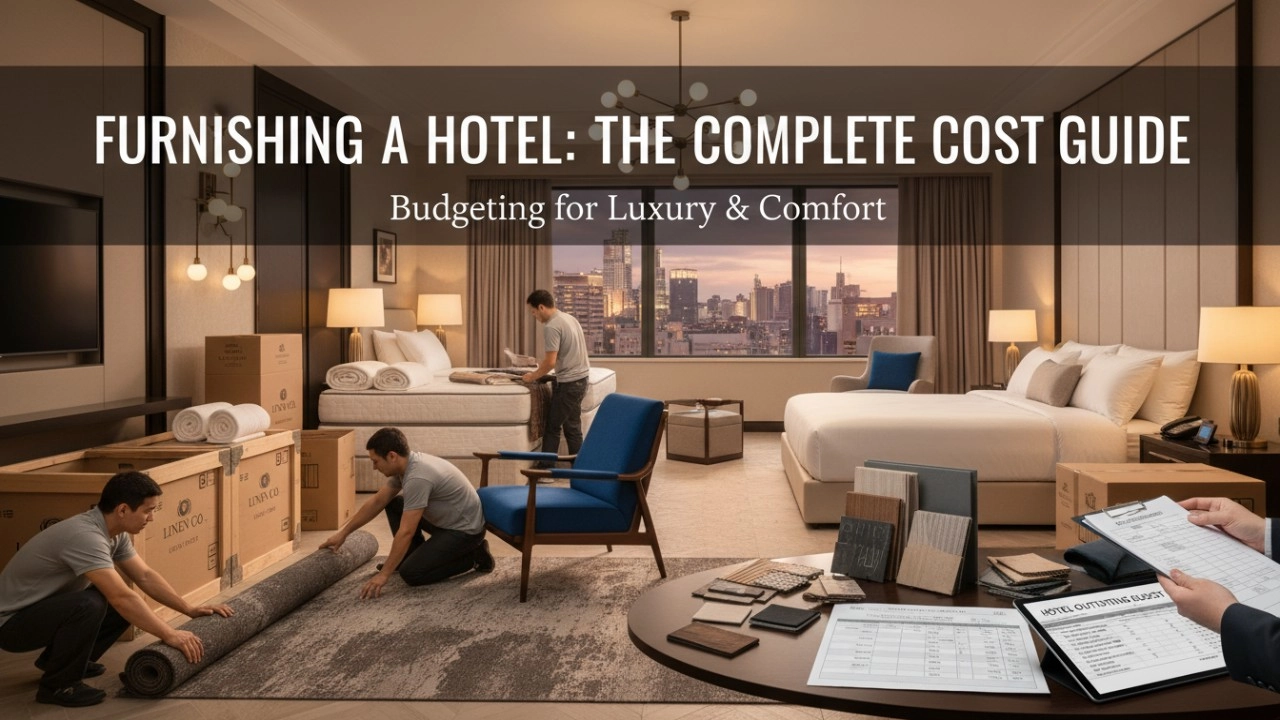
The Ultimate 2026 Guide to Total Hotel Furnishing Costs: From Lobby to Penthouse
Essential Hotel Furniture for a Seamless Setup - STARJOY
Custom Hotel Furniture Solutions in Tunisia by STARJOY
About Cooperation Process
How to sign a cooperation agreement?
We will provide you with a draft cooperation agreement, which will be signed by both parties after confirmation to ensure the legality and standardization of the cooperation process.
About Products and Services
How do you ensure the quality of your products?
All products are produced in accordance with export quality standard and have passed quality, safety and environmental protection certification. We ensure that every product is strictly inspected to meet the safety and quality requirements of the international market.
What are the main qualifications and honors of your company?
Our company is a member of the Guangdong Building Decoration Materials Association and has many years of professional experience in developing, designing and producing hotel furniture and supporting product. We have won many honors such as the top 10 in China's hotel furniture industry.
If there is a problem with the product, what after-sales service do you provide?
We provide comprehensive after-sales service, including return and exchange of product quality problem, repair, etc. If you encounter any problems during use, you can contact our customer service team at any time and we will solve it for you as soon as possible.
Why Choose STARJOY
What sets Starjoy Hotel Furniture apart from other suppliers?
Starjoy stands out due to our long history of nearly 20 years in the industry. Our expertise spans research, design, manufacturing, and installation. We also focus on providing one-stop solutions, which include personalized design, production, timely delivery, and professional installation.
Our furniture is built using advanced machinery and high-quality materials, ensuring that all products meet the highest standards of durability and functionality. We also offer customized solutions based on our clients' needs and hotel themes.

No.19, Gulou Industrial Zone, Jianggao Town, Baiyun District, Guangzhou
monica@starjoyglobal.com


