

How to maintain commercial hotel lobby furniture? | Insights by STARJOY
Maintaining commercial hotel lobby furniture goes beyond basic cleaning; it's a strategic investment in guest experience and asset longevity. This guide delves into critical aspects from selecting durable materials during procurement to implementing robust cleaning protocols and preventative measures. We explore material-specific care for fabrics, wood, metal, and stone, detail effective maintenance schedules, and provide insights into when to repair versus replace. Understanding these professional approaches ensures your custom hotel furniture retains its aesthetic appeal and structural integrity for years, optimizing your operational budget and enhancing your hotel's welcoming ambiance.
- Mastering Commercial Hotel Lobby Furniture Maintenance: A Guide for Custom Furniture Buyers
- What are the fundamental principles for maintaining commercial hotel lobby furniture to ensure longevity and appearance?
- What specific cleaning protocols are recommended for common hotel lobby furniture materials like performance fabrics, wood, metal, and stone?
- How can design and material choices during procurement proactively reduce future maintenance burdens and extend furniture life?
- What preventative measures can hotels implement to protect lobby furniture from daily wear, tear, and accidental damage?
- What constitutes an effective maintenance schedule for high-traffic hotel lobby furniture, and how does it differ based on usage?
- When is it more cost-effective to repair/refurbish versus replace lobby furniture, and what factors should influence this decision?
- What role does staff training play in effective furniture maintenance, and what key aspects should be covered?
- Sources
Mastering Commercial Hotel Lobby Furniture Maintenance: A Guide for Custom Furniture Buyers
The lobby is often the first and last impression guests have of a hotel. The furniture within this high-traffic area plays a crucial role in shaping that perception, influencing comfort, style, and brand image. For custom hotel furniture buyers and hospitality professionals, understanding comprehensive maintenance strategies is key to preserving these valuable assets, ensuring longevity, and maximizing return on investment. This guide explores the essential questions surrounding commercial hotel lobby furniture maintenance, offering professional insights for informed procurement and upkeep.
What are the fundamental principles for maintaining commercial hotel lobby furniture to ensure longevity and appearance?
Effective maintenance for commercial hotel lobby furniture hinges on a few core principles: proactive care, material understanding, and consistency. Firstly, proactive care means anticipating wear and tear rather than just reacting to damage. This begins with selecting high-quality, commercial-grade furniture during procurement, designed for heavy use. Secondly, a deep understanding of each furniture material (upholstery, wood, metal, stone) is crucial, as each demands specific cleaning agents and techniques. Incorrect products can cause irreversible damage. Finally, consistency in daily, weekly, and periodic maintenance schedules ensures small issues don't escalate into costly repairs or premature replacement. Industry experts often note that well-maintained commercial furniture, even in high-traffic areas, can exceed its typical 7-10 year lifespan, potentially reaching 15-20 years with diligent care.
What specific cleaning protocols are recommended for common hotel lobby furniture materials like performance fabrics, wood, metal, and stone?
- Performance Fabrics (e.g., Crypton, Sunbrella): These engineered textiles are designed for stain and spill resistance. For most spills, a clean cloth and mild soap-and-water solution are sufficient. Always blot, never rub. Regular vacuuming (daily in high-traffic areas, weekly elsewhere) prevents dirt accumulation. Professional deep cleaning is recommended every 6-12 months, depending on traffic, to maintain appearance and hygiene. Always consult the manufacturer's specific cleaning instructions.
- Wood Furniture: Regular dusting with a soft, dry cloth or microfibre duster prevents surface scratches. Spills should be wiped immediately. Use pH-neutral wood cleaners or polishes sparingly, avoiding silicone-based products which can build up over time. Protect wood from direct sunlight, excessive heat, and humidity, as these can cause fading, warping, or cracking. A professional refinish might be needed every few years for high-wear areas.
- Metal Fixtures (e.g., Stainless Steel, Brass, Chrome): Wipe down with a damp cloth and mild, non-abrasive detergent. Dry thoroughly to prevent water spots, tarnishing, or rust. For stainless steel, wipe in the direction of the grain. Specialized metal polishes are available for chrome or brass to restore lustre, but avoid abrasive cleaners or pads that can scratch the finish.
- Stone Surfaces (e.g., Marble, Granite, Quartz): Clean spills promptly with a soft cloth and a pH-neutral stone cleaner. Acidic cleaners (like vinegar or lemon juice) can etch natural stone. Natural stone like marble and granite require periodic sealing (typically every 6-12 months) to maintain their stain resistance. Quartz, being engineered, is less porous and typically doesn't require sealing, but still benefits from pH-neutral cleaning.
How can design and material choices during procurement proactively reduce future maintenance burdens and extend furniture life?
This is where custom hotel furniture buyers have significant leverage. Prioritizing durability and ease of maintenance during the procurement phase directly translates to reduced operational costs and extended furniture life. Key considerations include:
- Performance Fabrics: Investing in fabrics with inherent stain, moisture, and abrasion resistance (e.g., Crypton, Nano-Tex, or high-density commercial-grade weaves) drastically cuts down cleaning time and the frequency of re-upholstery.
- Durable Finishes: Specify scratch-resistant finishes for wood and metal surfaces, such as catalyzed lacquers or powder coatings, especially for tabletops and chair arms.
- Robust Construction: Opt for furniture with solid wood frames, commercial-grade plywood, reinforced joints (e.g., mortise and tenon, corner blocks), and heavy-duty hardware. These withstand the rigours of commercial use far better than residential-grade alternatives.
- Design for Maintenance: Features like removable/washable cushion covers, raised bases for easier cleaning underneath, modular components for easy replacement of worn parts, and rounded edges (less prone to chipping) contribute significantly to long-term maintainability.
What preventative measures can hotels implement to protect lobby furniture from daily wear, tear, and accidental damage?
Proactive prevention is often more cost-effective than reactive repair. Implementing simple measures can significantly extend furniture lifespan:
- Floor Glides/Protectors: Install high-quality glides on chair and table legs to prevent scratches on flooring and reduce wear on furniture feet.
- Coasters and Placemats: Encourage their use on tables to protect surfaces from drink rings and food spills.
- Regular Rotation: Rotate cushions on upholstered seating and, where possible, rotate furniture pieces to ensure even wear patterns. This can extend upholstery life by 20-30%.
- Strategic Placement: Position furniture away from direct sunlight (which causes fading) and HVAC vents (which can dry out wood).
- Immediate Spill Response: Train staff to address spills immediately using the correct cleaning protocols for the material.
- Protective Barriers: Consider applying additional fabric or surface protectors if not already integrated into the material.
What constitutes an effective maintenance schedule for high-traffic hotel lobby furniture, and how does it differ based on usage?
An effective maintenance schedule is tiered and adjusted based on the lobby's traffic volume:
- Daily: Dusting all surfaces, wiping up spills immediately, spot cleaning visible marks on upholstery, straightening cushions and decorative elements.
- Weekly: Thorough vacuuming of all upholstered furniture, detailed cleaning of all surfaces (wood, metal, glass, stone) with appropriate cleaners, checking for any loose hardware or minor damage.
- Monthly: Deep cleaning of high-traffic areas, more thorough inspection of furniture for wear, checking and tightening loose joints or screws.
- Quarterly/Bi-Annually: Professional upholstery cleaning for all lobby seating, re-sealing natural stone surfaces, re-polishing wood, and a comprehensive inspection for significant wear or damage.
- Annually: Full inventory and condition assessment of all lobby furniture, scheduling any necessary touch-ups, repairs, or professional restoration.
Higher traffic areas (e.g., near reception, main seating clusters) will require more frequent weekly and monthly deep cleaning than lesser-used zones.
When is it more cost-effective to repair/refurbish versus replace lobby furniture, and what factors should influence this decision?
This is a critical decision for asset management. It's often more cost-effective to repair or refurbish when:
- Structural Integrity is Sound: If the frame (wood, metal) is still strong and stable, cosmetic issues like worn upholstery or scratched finishes can be addressed.
- Cost Savings: Refurbishing, which includes re-upholstery, refinishing wood, or replacing cushions, typically costs 30-60% less than purchasing new furniture, extending its life by another 5-10 years.
- Sustainability Goals: Repairing reduces landfill waste and aligns with eco-friendly initiatives.
- Unique Design Value: If the furniture is custom-designed or particularly high-quality, retaining and restoring it can preserve the original design intent and initial investment.
Replacement becomes necessary when structural damage is significant, multiple components are failing, safety is compromised, the style is irredeemably outdated, or repair costs approach 70-80% of the new furniture cost. High-quality custom furniture is inherently designed for longevity, making refurbishment a viable and often superior option compared to replacing lower-quality items.
What role does staff training play in effective furniture maintenance, and what key aspects should be covered?
Well-trained staff are the front line of furniture maintenance and crucial for preserving its condition. Training should cover:
- Manufacturer Guidelines: Specific cleaning instructions for each type of material and furniture piece.
- Immediate Spill Response: How to quickly and correctly address spills to prevent permanent staining or damage.
- Correct Product Usage: Which cleaning agents are safe for specific materials and how to apply them, emphasizing testing in inconspicuous areas.
- Damage Identification: How to spot early signs of wear, loose components, or damage, and the proper reporting procedures for these issues.
- Basic Upkeep: Daily dusting, vacuuming techniques, and proper arrangement of cushions and decorative items.
Investing in comprehensive staff training ensures that maintenance protocols are consistently followed, preventing costly mistakes and significantly contributing to the furniture's lifespan and the lobby's overall appearance.
The STARJOY Advantage: Crafting for Longevity and Ease of Maintenance
At STARJOY, we understand that custom hotel lobby furniture is a significant investment. Our commitment to crafting commercial-grade furniture is deeply intertwined with the principles of long-term durability and ease of maintenance discussed in this guide. We meticulously select high-performance materials, from robust wood and metal frames to stain-resistant performance fabrics, ensuring each piece is built to withstand the rigours of a high-traffic hospitality environment. Our designs often incorporate features like durable finishes, strong joinery, and components that simplify cleaning and facilitate potential refurbishment. By choosing STARJOY, hotel operators and buyers are not just acquiring aesthetically pleasing furniture; they are investing in resilient, easy-to-maintain assets that will enhance guest experiences and deliver exceptional value for years to come, minimizing future operational burdens and maximizing your budget efficiency.
Sources
Title: The Life Cycle of Hotel Furniture: When to Replace, When to Refurbish
URL: https://www.hotelbusiness.com/the-life-cycle-of-hotel-furniture/
Date: 2023-08-15
Title: Refurbishing Your Hotel Furniture: Is It Worth It?
URL: https://www.hospitality-design.com/articles/refurbishing-hotel-furniture/
Date: 2023-09-01
Title: IICRC S100 Standard and Reference Guide for Professional Cleaning of Textile Floor Coverings
URL: https://www.iicrc.org/s100/
Date: Ongoing (Standard updated periodically)
Title: Guide to Maintaining Wood Furniture
URL: https://www.furniturecare.org/wood-care/
Date: 2023-07-20
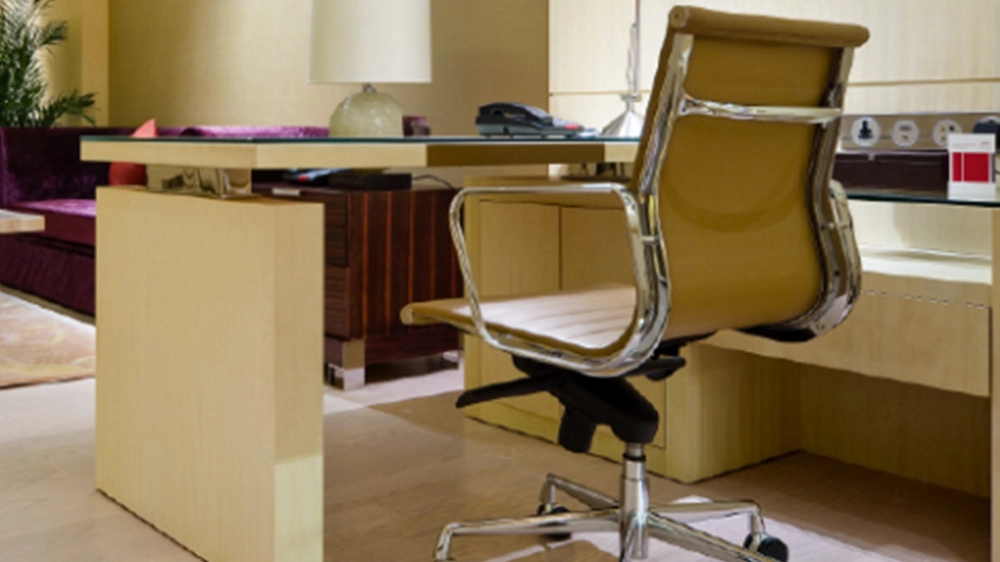
How to Make Your Desk Chair More Comfortable: 6 Expert Tips

Starjoy Successfully Participated in Saudi Furniture Exhibition 2025 | International Hotel Furniture Supplier
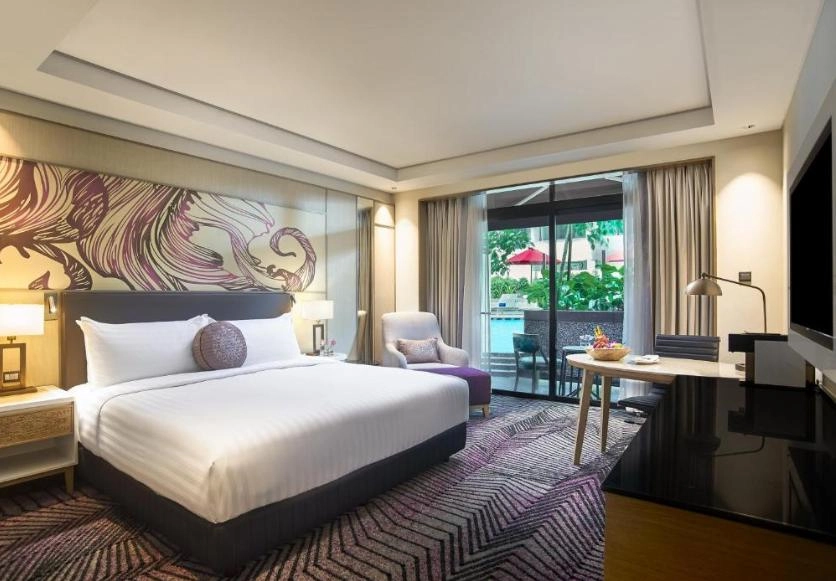
Starjoy Hotel Furniture: Crafting Premium Hospitality Spaces with Custom Solutions
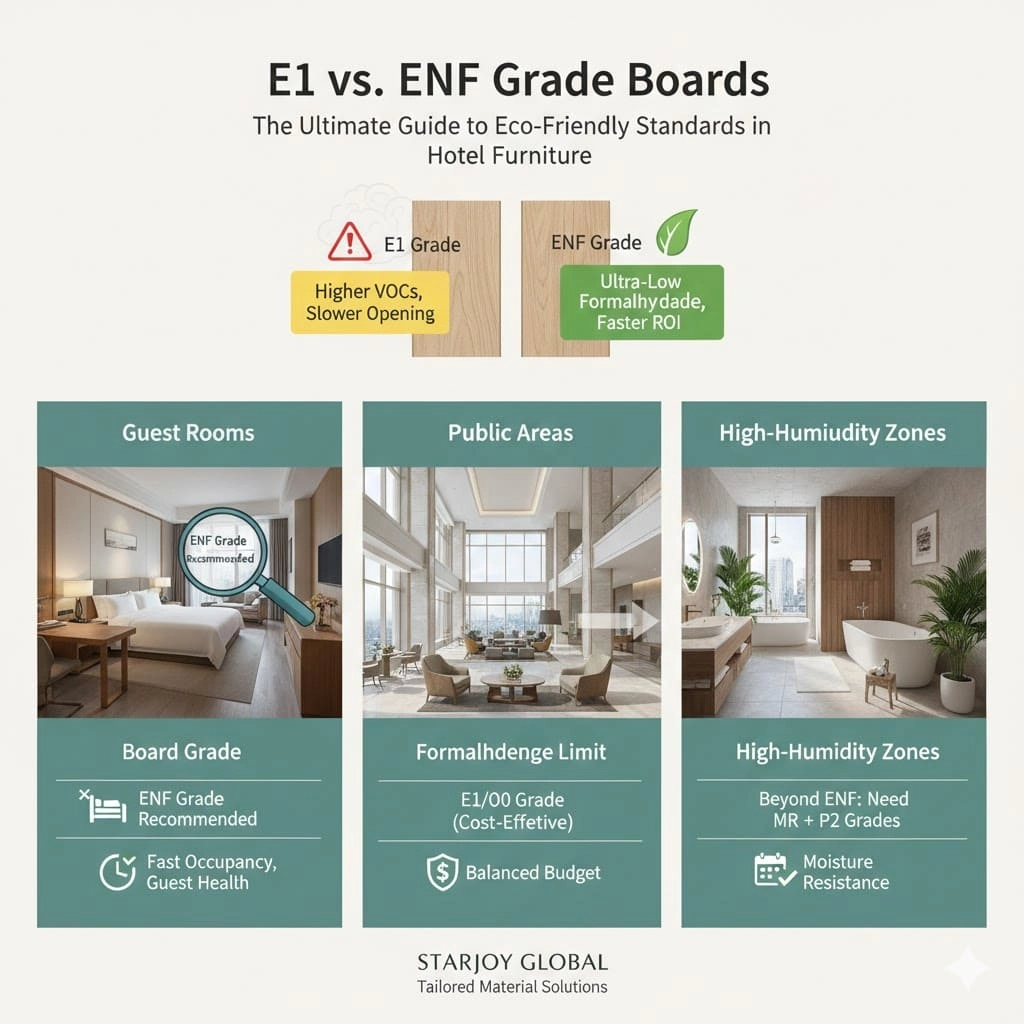
E1 vs. ENF Grade Boards: The Ultimate Guide to Eco-Friendly Standards in Hotel Furniture
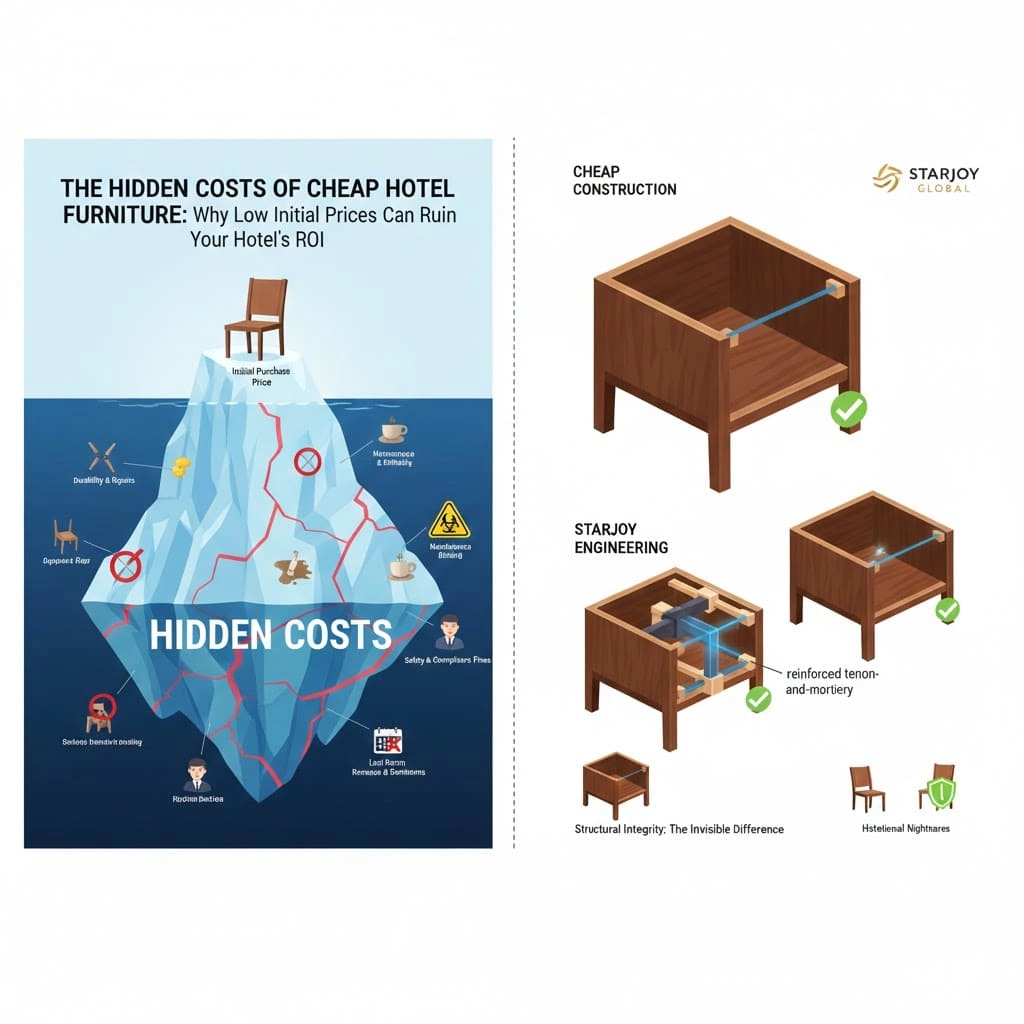
The Hidden Costs of Cheap Hotel Furniture: Why Low Initial Prices Can Ruin Your Hotel’s ROI
Products
What is the MOQ of your products?
Different situations have different MOQ. We make customized models, which depends on the specific materials and dimensions of your product. You can tell me the specific requirements of the product, and we will give you a quote.
What's the price of your model room?
Usually it is 2 times the price. Of course, if the negotiation is better, it can be more favorable. The price is negotiable.
What are the payment terms and shipping terms?
We mainly do TT and FOB, other terms can also be discussed in detail.
About Cooperation Process
What information do I need to provide to start the cooperation process?
You need to provide your company information, product need, customization requirement, cooperation intention and other relevant information.
Why Choose STARJOY
Why choose STARJOY?
1) We have perfect hotel furniture project implementation capabilities: we have a professional in-depth design team, an efficient production team, and an experienced and friendly after-sale service team.
2) Our product quality is worthy of customer trust.
3) We have a flexible pricing system.
4) We have a strong willingness to cooperate.
Get in Touch
We strive to provide the most thoughtful service, excellent quality and value to every customer who customizes hotel furniture from STARJOY. If you have any questions about your order, please contact us.

No.19, Gulou Industrial Zone, Jianggao Town, Baiyun District, Guangzhou
monica@starjoyglobal.com


